
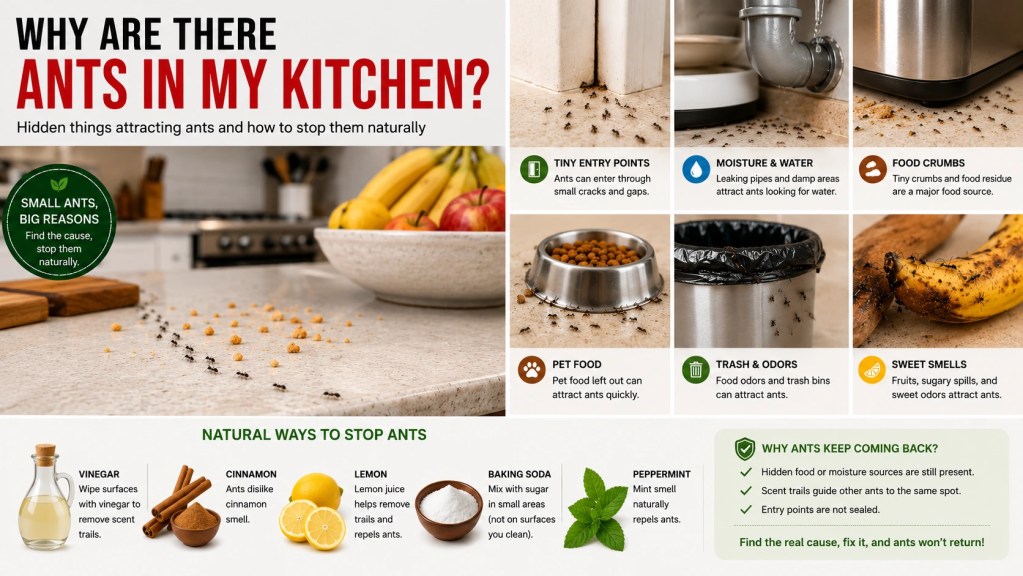
Finding ants in the kitchen can feel frustrating, especially when your home already looks clean. Many people assume ants only appear because of visible food crumbs or poor cleaning habits, but that is not always true. In many cases, ants are attracted by small hidden factors most homeowners completely overlook.
If you have been wondering why there are ants in your kitchen, the answer usually comes down to food, moisture, scent trails, or tiny entry points that are easy to miss during everyday cleaning. Once ants discover a reliable source of food or water, they continue returning and may eventually create a much larger infestation problem inside the home.
The reason this problem becomes so stressful is because ants rarely appear alone. A few ants on the counter often mean many more are hidden nearby. This is why people searching for ants in kitchen problems are usually looking for fast answers before the situation becomes worse.
Another important detail is that kitchens naturally provide almost everything ants need to survive:
- food residue
- water
- warmth
- hidden shelter
- small cracks
- garbage odors
Even homes that look spotless can accidentally attract ants over time.
Why Ants Suddenly Appear in the Kitchen
One of the most confusing parts of an ant problem is how suddenly it seems to happen. Many people wake up one morning and notice tiny ants in the kitchen even though there were none the day before.
In reality, ants usually do not appear “suddenly.” What actually happens is that scout ants discover a food or water source first. Once they find something valuable, they leave behind invisible pheromone trails that guide the rest of the colony directly into the kitchen.
This is one reason ants keep coming back even after you wipe surfaces clean. The scent trail itself may still remain, even if the visible crumbs are gone.
Temperature changes can also increase activity. During warmer seasons, ants become far more active and start searching aggressively for food and moisture. Heavy rain can create the same effect because outdoor colonies may temporarily move indoors to escape wet conditions.
Another overlooked reason is seasonal food availability. Kitchens contain consistent food access year-round, which makes them one of the most attractive areas inside a home.
If you are asking:
- why are there ants in my kitchen
- why do ants keep appearing
- why are ants suddenly in my kitchen
the answer is often connected to hidden attractants rather than obvious dirt.
Hidden Things That Secretly Attract Ants
Most people only focus on visible food crumbs when trying to stop ants. But ants are often attracted by much smaller and less obvious things.
For example, a tiny sugary spill behind a coffee machine may attract ants for days without being noticed. Small grease residue near the stove can also become a food source. Even moisture under the sink may be enough to attract certain ant species.
This is why some people experience ants in kitchen but no food visible anywhere.
Ants can detect:
- sugar residue
- grease
- moisture
- pet food smells
- fruit residue
- garbage odors
- syrup drips
- sticky drink spills
in extremely small amounts.
One common mistake is only cleaning visible surfaces while ignoring hidden areas behind appliances, under trash bins, or inside cabinets. Ant colonies are surprisingly efficient at locating overlooked food sources that humans rarely notice.
Another major issue is scent trails. Once ants successfully find food, they continue using the same route repeatedly. This creates the feeling that ants keep coming back no matter how many times you remove them.
Some homeowners accidentally make the problem worse by spraying random cleaners directly onto ants without removing the original attractant. This may kill visible ants temporarily but does not solve the underlying reason they entered the kitchen in the first place.
Tiny Ants in Kitchen: Why They’re So Common
Tiny ants in kitchen areas are one of the most searched pest problems online. Smaller ants are especially difficult to control because they can enter through extremely small openings around windows, pipes, flooring, and cabinets.
Many tiny ant species are also highly attracted to sweet foods and moisture. Kitchens naturally provide both.
For example:
- honey residue
- soda spills
- ripe fruit
- syrup containers
- wet sponges
- dishwashing areas
can all attract tiny ants very quickly.
One reason these ants become so persistent is because their colonies may contain thousands of workers. Killing a few visible ants rarely stops the actual infestation. As long as the colony still has access to food and water, new ants continue following the same trails.
This is why understanding what attracts ants in kitchen spaces is more important than simply removing the insects you currently see.
Another mistake people make is assuming ants only appear in dirty homes. In reality, even clean kitchens can attract ants if there is accessible moisture or hidden food residue somewhere nearby.
Sometimes the issue is not cleanliness at all — it is accessibility.
Even a small crack near a window or pipe opening may allow ants to enter continuously without homeowners realizing where they are coming from.
Tiny Crumbs Most People Completely Ignore
One of the biggest reasons ants keep coming back is because people often underestimate how little food ants actually need. A kitchen may appear perfectly clean at first glance while still providing enough food to support an entire trail of ants.
Tiny crumbs hidden between appliances are one of the most common examples. Areas beside refrigerators, under stoves, beneath toasters, or near coffee stations often collect small food particles that go unnoticed for long periods.
This is especially true with:
- bread crumbs
- sugar crystals
- cereal pieces
- cookie residue
- sticky drink spills
- cooking oil splatter
Even very small amounts can attract ants quickly.
Children’s snack areas are another major source. Many homeowners focus on countertops but forget chairs, floor corners, or areas near dining tables where tiny food particles collect over time.
This explains why some people notice ants in kitchen overnight even after cleaning the counters carefully.
Another overlooked problem is reusable kitchen cloths and sponges. Damp sponges with trapped food residue can attract ants because they provide both moisture and organic material at the same time.
If you are constantly wondering:
- why ants keep coming back
- why are there ants in my kitchen
- why do ants appear after cleaning
hidden crumbs are often part of the answer.
Moisture and Water Sources Attract Ants More Than People Realize
Many people think ants only care about food, but moisture is often just as important.
Certain ant species actively search for water sources, especially during warmer months or dry weather conditions. Kitchens naturally provide multiple moisture areas that ants can use to survive.
Common examples include:
- leaking sink pipes
- wet dish racks
- standing water
- damp sponges
- coffee machine condensation
- refrigerator drip trays
- pet water bowls
Even small moisture buildup behind appliances can attract ants.
This is one reason people sometimes experience ants in kitchen but no food visible anywhere. The ants may actually be searching for water instead of food.
Under-sink cabinets are especially problematic because they often remain dark, humid, and undisturbed for long periods. Small plumbing leaks can create ideal conditions for ants without homeowners noticing immediately.
Dishwashers can also contribute to the problem. Moisture combined with leftover food particles creates a highly attractive environment for ants and other pests.
Another important detail is seasonal weather.
During very hot weather, outdoor ants often move indoors searching for stable moisture sources. Heavy rain can create the opposite effect by flooding outdoor colonies and forcing ants into homes temporarily.
This is why ant problems often seem to increase suddenly during weather changes.
Pet Food and Trash Areas Are Major Ant Magnets
One of the most overlooked causes of ants in kitchen spaces is pet food.
Pet bowls often remain accessible for hours, giving ants plenty of time to locate food sources and create scent trails. Dry pet food contains proteins, oils, and carbohydrates that many ant species find highly attractive.
Even tiny crumbs around feeding areas can trigger repeated ant activity.
Water bowls can create additional problems because they provide moisture alongside food access. Once ants discover both resources together, they are much more likely to return continuously.
Trash bins are another major issue.
Even when garbage bags are tied properly, small liquid leaks, food residue, or sugary containers inside trash bins may still attract ants. Recycling bins can be especially problematic because soda cans, juice containers, and food packaging often contain leftover sugar residue.
One reason ants keep appearing near trash areas is because odors continue lingering even after garbage removal. Ants rely heavily on scent detection, and some food smells remain much longer than people realize.
This becomes worse if:
- trash bins are not cleaned regularly
- food containers are left open
- fruit scraps remain exposed
- garbage sits overnight
Many homeowners focus only on killing visible ants while ignoring the areas that originally attracted them.
But unless the attractant disappears completely, the ants usually return.
Why Ants Keep Coming Back After Cleaning
This is one of the most frustrating parts of an ant problem.
You clean the kitchen.
You remove the ants.
Everything looks fine.
Then the ants return again the next day.
The reason ants keep coming back is usually connected to invisible pheromone trails left behind by scout ants. These chemical trails guide other ants directly toward food and water sources.
Even after wiping away visible ants, the trail itself may still remain on:
- countertops
- walls
- cabinet edges
- floors
- baseboards
This is why the same ant path often reappears repeatedly.
Another issue is incomplete cleaning.
For example, spraying ants with random cleaners may kill visible insects without removing the underlying food residue attracting them. In some cases, dead ants themselves release signals that attract more ants to the area.
Entry points also matter.
If ants continue entering through the same small crack or opening, removing visible ants alone rarely solves the problem permanently.
Common entry points include:
- window gaps
- pipe openings
- door frames
- wall cracks
- flooring edges
- electrical openings
Tiny ants especially can fit through surprisingly small spaces.
This is why long-term ant prevention requires:
- removing attractants
- cleaning scent trails
- reducing moisture
- sealing entry points
instead of only focusing on temporary removal.
Black Ants in Kitchen: Are They Dangerous?
Black ants in kitchen areas are extremely common in homes. In most cases, they are more annoying than dangerous, but that does not mean they should be ignored.
Some black ant species contaminate food by crawling across garbage areas, drains, or dirty surfaces before entering kitchens. Large infestations may also indicate hidden moisture problems or structural openings around the home.
Another issue is colony growth.
A small trail of black ants today can become a much larger infestation later if food and water sources remain available.
This is especially true during warmer seasons when colonies expand rapidly.
People often search:
- black ants in kitchen meaning
- why are black ants in my kitchen
- how to stop black ants naturally
because repeated infestations usually signal an ongoing attractant somewhere inside the home.
Understanding why ants entered in the first place is far more important than simply spraying them temporarily.
Small Cracks and Entry Points Most Homeowners Never Notice
One of the biggest reasons ants enter kitchens is surprisingly simple: access.
Many people spend time searching for food sources while completely ignoring how ants are getting inside the home in the first place. Tiny ants especially can enter through openings so small they are almost invisible.
Common kitchen entry points include:
- gaps around windows
- pipe openings under sinks
- cracks near baseboards
- spaces beneath doors
- damaged caulking
- flooring gaps
- wall openings behind appliances
Once ants discover an easy entry route, they continue using it repeatedly.
This is why many homeowners feel like ants keep coming back no matter how much cleaning they do. Even if food sources are reduced, open entry points allow scout ants to continue exploring the kitchen daily.
Warm areas around appliances can also attract ants because small gaps often form behind refrigerators, ovens, and dishwashers over time. Moisture buildup in these locations makes the problem even worse.
Another overlooked issue is outdoor vegetation.
Plants, bushes, or tree branches touching the house can create direct pathways for ants to reach windows and small openings around the exterior walls. Many infestations actually begin outside before gradually spreading into kitchen spaces.
If you are wondering:
- how ants enter houses
- why ants keep appearing in kitchen
- where are ants coming from
small hidden openings are often the answer.
Ants in Kitchen But No Food? Here’s What’s Really Happening
This is one of the most confusing situations for homeowners.
You look around the kitchen carefully.
No crumbs.
No spills.
No open food.
Yet ants still appear every day.
When people experience ants in kitchen but no food visible anywhere, the issue is often one of three things:
- hidden moisture
- invisible residue
- old pheromone trails
Ants do not need large visible food sources to remain active. A tiny sugary residue near a coffee maker or small grease buildup beside the stove may be enough to keep attracting them.
Moisture is another major reason.
Ants sometimes enter kitchens primarily searching for water instead of food. This becomes especially common during:
- hot weather
- dry outdoor conditions
- heavy rain
- seasonal temperature changes
Leaks under sinks or condensation behind appliances may quietly attract ants for weeks before homeowners realize it.
Another possibility is that the ants are using the kitchen as a travel route rather than a feeding zone. Some colonies establish scent highways through homes even when food is limited.
This is why random ant appearances can continue even after aggressive cleaning.
The important thing to understand is that ants rarely enter without a reason. If they continue appearing, something inside the environment is still attracting or guiding them.
Kitchen Habits That Secretly Cause Ant Problems
Sometimes the issue is not a single major mistake.
Instead, it is several small habits that slowly make the kitchen more attractive to ants over time.
One common example is leaving dishes overnight. Even tiny food residue left on plates or cups can attract scout ants searching for easy food access.
Fruit storage is another overlooked problem. Bananas, apples, peaches, and other ripe fruits release sweet odors that ants can detect surprisingly well.
Open snack containers also contribute heavily to ant activity, especially foods containing:
- sugar
- syrup
- honey
- cereal
- peanut butter
- crumbs
Another habit people rarely think about is wiping counters with dirty cloths. Instead of removing food residue completely, old cloths sometimes spread sugary residue across larger surface areas.
Trash habits matter too.
Even if garbage is removed regularly, leaving sticky residue at the bottom of trash bins can continue attracting ants long afterward.
Pet feeding schedules can also influence infestations. Food bowls left out overnight give ants uninterrupted access to food sources for hours at a time.
Some homeowners accidentally create ant-friendly environments simply by delaying small cleaning tasks repeatedly.
The kitchen may still look clean visually while hidden attractants continue building slowly.
Mistakes That Make Ant Problems Worse
One of the biggest mistakes people make is focusing only on killing visible ants.
At first, this feels satisfying because the ants disappear temporarily. But if the original attractant remains, new ants quickly replace them.
Another common mistake is using too many random sprays without understanding where the ants are actually coming from. Strong-smelling cleaners sometimes disrupt visible trails temporarily while failing to solve the real problem underneath.
In some situations, aggressive spraying may even scatter colonies and worsen the infestation.
Ignoring moisture issues is another major problem.
Many homeowners continue searching for food crumbs while leaks, humidity, or standing water remain untouched nearby. Certain ant species prioritize moisture just as much as food.
Another mistake is inconsistent cleaning.
Cleaning thoroughly one day and then leaving small spills or dirty dishes the next day creates unstable conditions that continue attracting scout ants repeatedly.
People also underestimate how important entry points are.
If cracks and gaps remain open, ants continue re-entering the kitchen even after successful cleaning.
One of the worst approaches is waiting too long.
A small kitchen ant problem can grow surprisingly fast because colonies continuously send new workers once reliable food or water sources are discovered.
This is why understanding what attracts ants in kitchen areas matters more than reacting emotionally every time ants appear.
Why Tiny Ant Infestations Become Hard to Control
Tiny ants create unique problems compared to larger pests because they spread quickly and hide extremely well.
Small colonies may establish themselves:
- inside walls
- beneath flooring
- behind cabinets
- under appliances
- inside insulation gaps
without obvious warning signs.
Because the ants themselves are so small, homeowners often underestimate how large the colony actually is.
Another issue is reproduction speed.
Once ants find consistent food and moisture access, colony growth accelerates rapidly. This is why tiny ants in kitchen areas sometimes seem manageable at first but suddenly become overwhelming later.
Some species also create multiple smaller colonies instead of relying on one central nest. This makes elimination more difficult because killing visible ants may not affect the actual colony structure at all.
The longer food and water remain available, the more stable the infestation becomes.
This is why prevention and early intervention matter far more than most people realize.
How to Stop Ants in the Kitchen Naturally
When people notice ants in the kitchen, the first reaction is often to spray chemicals everywhere immediately. But in many situations, long-term ant control starts with removing the reasons ants entered the kitchen in the first place.
The most effective natural approach combines:
- food control
- moisture reduction
- scent trail removal
- entry point sealing
instead of relying only on temporary sprays.
One of the first things to do is wipe surfaces using a mild cleaning solution that removes invisible food residue and pheromone trails. Simply killing visible ants without removing the trail often leads to the same infestation returning repeatedly.
Drying wet areas is equally important.
Sinks, dish racks, damp sponges, and under-sink cabinets should remain as dry as possible because moisture attracts many ant species very quickly.
Food storage also matters more than most people realize.
Sugar, cereal, pet food, snacks, and ripe fruits should be stored in sealed containers whenever possible. Even tiny exposed crumbs may continue attracting scout ants.
Another important step is sealing entry points.
Small cracks around:
- windows
- pipes
- cabinets
- doors
- flooring edges
allow ants to enter continuously without being noticed.
Many homeowners focus entirely on removing ants while leaving the original access points completely open.
Natural prevention works best when multiple small improvements happen together rather than relying on one “miracle solution.”
What Smells Attract Ants the Most?
Ants rely heavily on scent detection when searching for food and water. Some smells are especially attractive and can draw ants into kitchens surprisingly fast.
The strongest attractants usually include:
- sugar
- syrup
- honey
- ripe fruit
- soda residue
- grease
- pet food
- sweet drinks
Even tiny amounts can trigger scouting behavior.
Fruit odors are especially powerful during warmer seasons. Overripe bananas, apples, peaches, and other sweet fruits often attract ants faster than people expect.
Grease is another overlooked attractant.
Many homeowners focus only on sugary foods while ignoring cooking oil buildup around stoves, air fryers, ovens, and kitchen counters. Certain ant species are highly attracted to fats and proteins as well.
Trash odors also matter.
Food containers thrown into garbage bins may continue releasing strong smells long after the visible mess disappears. Recycling bins are especially common ant hotspots because soda cans and food packaging often contain hidden residue.
Pet food creates another major scent source.
Bowls left overnight can attract ants continuously because they provide both food and moisture together in one location.
If you are constantly wondering:
- what attracts ants in kitchen
- why ants keep returning
- why ants suddenly appeared
hidden smells are often the real reason.
How to Prevent Ants From Coming Back Long-Term
Temporary ant removal is relatively easy.
Long-term prevention is much harder.
The key difference is consistency.
Most recurring ant problems happen because small attractants slowly return over time. Even one overlooked area can restart the entire cycle again.
Long-term prevention usually involves:
- cleaning hidden areas regularly
- reducing moisture
- sealing cracks
- managing food storage
- cleaning trash bins
- removing scent trails quickly
Small habits matter much more than aggressive short-term spraying.
For example, wiping counters daily is helpful, but cleaning behind appliances occasionally may actually matter more for long-term prevention.
Kitchen routines also make a huge difference.
Leaving dishes overnight occasionally may not seem important, but repeated exposure to food residue gradually increases the chance of attracting scout ants.
Humidity control can also help significantly.
Homes with excess moisture often experience repeated pest activity because damp environments support easier survival for ants and other insects.
Another important detail is speed.
The faster spills and crumbs are removed, the less likely ants are to establish reliable scent trails inside the kitchen.
This is why prevention is always easier than dealing with a full infestation later.
Why Some Homes Get Ants More Often Than Others
Many homeowners feel embarrassed when ants appear in their kitchens, but ant problems are not always connected to poor cleaning.
Some homes naturally experience more ant activity because of:
- climate
- humidity
- nearby vegetation
- older construction
- small structural gaps
- plumbing moisture
- outdoor colonies nearby
Homes near trees, gardens, or heavily vegetated areas often experience more scouting activity because ant colonies already exist close to the structure.
Older homes may also contain:
- hidden wall gaps
- aging seals
- pipe openings
- foundation cracks
that allow ants to enter more easily.
Weather patterns matter too.
Heavy rain may force outdoor colonies indoors temporarily, while extreme heat often increases ant movement as they search for water.
This is why some people experience ants suddenly appearing in kitchen spaces even when their cleaning habits have not changed.
The environment itself often plays a major role.
Common Signs an Ant Problem Is Getting Worse
A few ants occasionally appearing may not always indicate a major infestation. But certain warning signs suggest the colony is becoming more established inside or around the home.
These signs include:
- multiple ant trails
- ants appearing at different times of day
- repeated infestations after cleaning
- ants near water sources constantly
- increasing numbers daily
- ants spreading into other rooms
One important sign is consistency.
If ants continue returning to the exact same location repeatedly, there is likely an active food, water, or scent source nearby.
Another warning sign is nighttime activity.
Many ant species become more active overnight when kitchens are quieter and food sources remain undisturbed.
Large numbers of tiny ants usually indicate the colony has already established stable access routes into the home.
This is why early prevention matters so much.
Small infestations are significantly easier to control before colonies fully adapt to indoor food sources.
What I Personally Recommend
If there is one thing I would recommend, it is this:
Stop focusing only on the ants themselves.
Most people panic when they see visible ants, but the real problem is usually the environment attracting them in the first place.
In my opinion, kitchens become vulnerable to ants through small repeated habits rather than one massive mistake. Tiny crumbs, moisture, hidden residue, and open entry points slowly create conditions ants can easily exploit.
I also think many people underestimate how intelligent ant colonies actually are. Once ants identify a reliable food or water source, they become extremely persistent.
That is why quick fixes often fail.
Personally, I think the best long-term strategy is combining:
- moisture control
- consistent cleaning
- sealed food storage
- entry point reduction
- fast spill cleanup
instead of relying entirely on sprays and chemicals.
The goal is not simply killing ants.
The goal is making the kitchen unattractive to them in the first place.
Final Thoughts
Finding ants in the kitchen is extremely common, but it usually happens for specific reasons that homeowners can identify and control over time.
Food residue, moisture, hidden smells, scent trails, and tiny entry points are some of the biggest causes of recurring ant problems inside kitchens.
Understanding why ants keep coming back is far more important than reacting to visible ants alone. Long-term prevention always starts with removing the conditions attracting them in the first place.
With the right habits and consistent prevention, most kitchen ant problems can be reduced significantly before turning into larger infestations.
FAQ (Frequently Asked Questions)
Why are there ants in my kitchen even when it’s clean?
Even clean kitchens may attract ants because of hidden crumbs, moisture, scent trails, or tiny food residue behind appliances and cabinets.
What attracts ants the most in kitchens?
Sugar, grease, ripe fruit, pet food, soda residue, and moisture are some of the strongest ant attractants inside kitchens.
Why do ants keep coming back after cleaning?
Ants often return because invisible pheromone trails remain on surfaces or because food, moisture, or entry points still exist somewhere nearby.
Can ants appear even if there’s no visible food?
Yes. Ants may enter kitchens searching for water, hidden residue, or using existing scent trails even when visible food is not present.
How do ants get inside the house?
Ants commonly enter through small cracks, pipe gaps, windows, doors, flooring edges, and openings around cabinets or appliances.
Are tiny ants in the kitchen dangerous?
Most tiny kitchen ants are more annoying than dangerous, but they can contaminate food and may indicate larger hidden colonies nearby.
What is the best natural way to stop ants?
Reducing moisture, removing food residue, sealing entry points, cleaning scent trails, and storing food properly are some of the most effective natural prevention methods.