
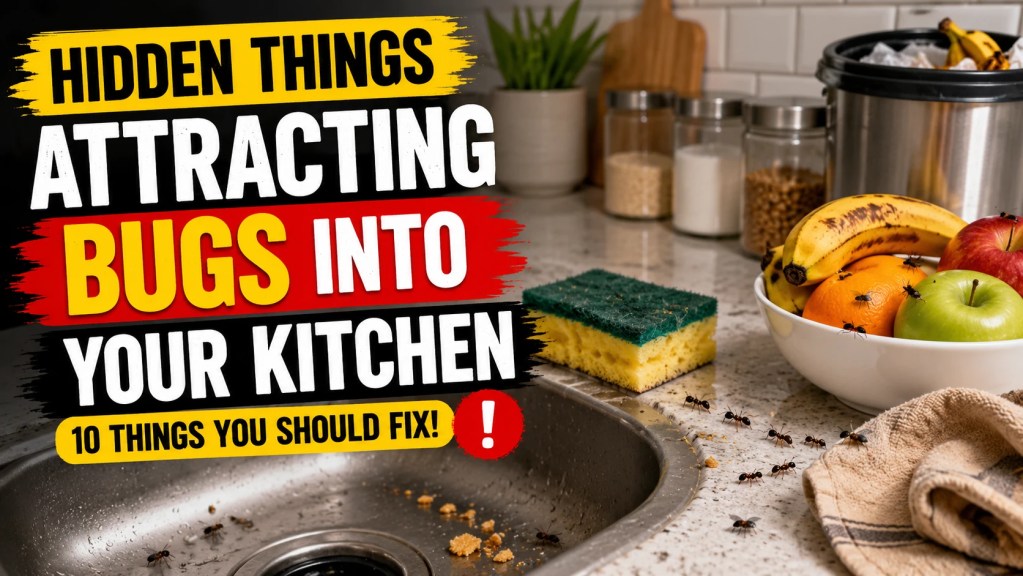
Most people assume bugs only appear in dirty kitchens. But in reality, even kitchens that look clean on the surface can quietly attract insects every single night.
Tiny crumbs, hidden moisture, food residue, and small daily habits often create the perfect environment for ants, flies, cockroaches, and other kitchen pests. In many homes, the problem is not one big mess — it’s several small things that go unnoticed for days or weeks.
If you’ve ever wondered what attracts bugs into your kitchen, the answer is usually connected to moisture, food access, hidden crumbs, and small daily habits that often go unnoticed.
The good news is that many of these problems are surprisingly easy to fix once you know what to look for.
✅ Quick Answer
The most common things attracting bugs into your kitchen include dirty dishes, wet sponges, food crumbs, open trash bins, standing water, grease buildup, and uncovered food. Even small amounts of moisture or leftover residue can attract insects overnight.
1. Dirty Dishes Left Overnight
One of the biggest things attracting bugs into your kitchen is leaving dirty dishes in the sink overnight.
Even small amounts of leftover food, grease, or sauce can attract insects surprisingly fast. Ants, flies, and cockroaches are especially drawn to food residue sitting in warm or damp environments.
Many people believe rinsing plates quickly is enough, but bugs can still detect tiny traces of food left on utensils, cups, or pans.
The problem becomes even worse during warmer months when kitchens stay humid longer at night.
For some insects, a sink full of dishes is essentially an open food source.
If you regularly notice bugs appearing in the morning, overnight dishes may be one of the hidden causes. Dirty dishes are one of the most common answers to the question: what attracts bugs into your kitchen?
Why It Attracts Bugs
Dirty dishes often provide:
- food residue
- grease
- moisture
- sugar traces
- standing water
This combination creates an ideal environment for kitchen pests.
What Helps Instead
A few small habits can make a major difference:
- rinse dishes immediately
- avoid leaving pans overnight
- wipe grease from sinks
- run the dishwasher before bed whenever possible
Even reducing moisture around the sink area may help lower insect activity.
2. Wet Sponges and Dishcloths That Attract Bugs
Wet kitchen sponges are another hidden problem many homeowners overlook.
A damp sponge sitting near the sink may not seem serious, but it can trap:
- food particles
- bacteria
- grease
- moisture
all in one place.
For insects searching for water and organic residue, this creates a surprisingly attractive environment.
This is especially true in kitchens with limited airflow or high humidity.
Many homeowners searching what attracts bugs into your kitchen are surprised to learn that wet sponges and damp dishcloths may quietly contribute to the problem.
Why Moisture Matters
Most kitchen bugs are not only looking for food — they are also searching for water.
Even small moisture sources can attract:
- ants
- roaches
- drain flies
- gnats
overnight.
That’s one reason bugs often appear near sinks first.
Better Kitchen Habits
Simple changes may help reduce bug activity:
- replace old sponges regularly
- allow dishcloths to dry fully
- avoid leaving wet towels piled together
- disinfect sink areas frequently
Keeping the sink area dry is often one of the easiest ways to make kitchens less attractive to insects.
3. Crumbs Hidden Under Appliances
One of the most overlooked things attracting bugs into your kitchen is hidden food debris under appliances.
Tiny crumbs often collect beneath:
- refrigerators
- toasters
- microwaves
- ovens
- coffee machines
and many homeowners rarely clean these areas thoroughly.
Even if the kitchen counters look spotless, insects may still find enough food underneath appliances to keep returning night after night.
This is especially common in busy kitchens where crumbs slowly build up over time without being noticed.
Why Bugs Love Hidden Crumbs
Small food particles trapped in dark spaces create a perfect environment for pests.
These hidden areas are often:
- warm
- difficult to reach
- undisturbed for long periods
- close to food and moisture sources
For ants and cockroaches, that combination is ideal.
Many people trying to figure out why bugs are attracted to their kitchen never think to check underneath appliances.
What Helps Instead
A few simple habits can make a noticeable difference:
- move small appliances regularly
- vacuum underneath kitchen equipment
- wipe grease and crumbs from hidden corners
- avoid storing loose food near appliances
Even occasional deep cleaning may help reduce insect activity over time.
4. Open Trash Bins
Trash bins are one of the most obvious but still surprisingly common causes of kitchen bugs.
Food scraps, moisture, sugar residue, and strong odors can attract insects very quickly — especially overnight.
Even small amounts of exposed garbage may attract:
- fruit flies
- ants
- cockroaches
- gnats
within hours.
This becomes even more noticeable during warmer weather when odors spread faster. Open garbage bins are another major clue when trying to understand what attracts bugs into your kitchen overnight.
Why Kitchen Trash Attracts Insects
Garbage bins often combine several things bugs actively search for:
- food residue
- moisture
- fermentation smells
- warmth
- organic waste
An open trash can basically acts like an invitation for pests.
In some kitchens, the problem is not the garbage itself — it’s the residue left around the lid, edges, or bottom of the bin.
Better Trash Habits
Small changes may help keep bugs away from kitchen areas:
- use bins with tight-fitting lids
- empty trash regularly
- rinse sticky containers before throwing them away
- clean the trash bin itself often
Many people focus on countertops while completely ignoring the garbage area nearby.
5. Standing Water Near the Sink
Many kitchen bugs are attracted to water just as much as food.
Small amounts of standing water around sinks, dish racks, or leaking pipes may quietly attract insects every night.
This includes:
- water under dish racks
- leaks beneath sinks
- puddles near faucets
- moisture around drains
- wet countertops
Even tiny water sources may support ongoing bug activity inside kitchens.
Why Moisture Problems Matter
Insects need water to survive.
That’s why bugs often gather near:
- sink cabinets
- plumbing areas
- damp corners
- drains
- leaking pipes
Some pests can survive surprisingly long with only moisture and very little food.
How to Reduce Moisture Around the Kitchen
Simple prevention habits may help:
- dry countertops before bed
- fix leaking pipes quickly
- empty standing water near sinks
- improve ventilation when possible
- wipe around faucet bases regularly
Reducing moisture is often one of the fastest ways to make kitchens less attractive to bugs.
6. Moisture and Leaky Pipes Behind Cabinets
Hidden leaks under sinks or behind kitchen cabinets may quietly attract bugs for weeks before homeowners even notice a problem.
Small plumbing leaks often create:
- moisture
- humidity
- damp wood
- hidden water buildup
which can attract insects searching for water sources.
This is especially common in older kitchens where slow leaks develop gradually over time.
Why Hidden Moisture Attracts Bugs
Many insects prefer dark and damp spaces where they can stay protected during the day.
Areas behind cabinets or under sinks may become ideal hiding spots for:
- cockroaches
- ants
- silverfish
- moisture-loving pests
Even minor leaks may contribute to ongoing bug activity indoors.
What Helps Instead
A few simple habits may help:
- inspect under sinks regularly
- fix plumbing leaks quickly
- reduce cabinet moisture
- improve airflow in damp areas
Finding hidden leaks early may help prevent larger pest problems later.
7. Fruit Left on the Counter
Fresh fruit may look harmless sitting on the kitchen counter, but it can quickly attract unwanted insects if left exposed too long.
Overripe bananas, apples, peaches, and other sweet fruits naturally release odors and sugars that attract:
- fruit flies
- gnats
- ants
- small flying insects
This becomes especially noticeable during warmer months when fruit ripens faster indoors.
Many people dealing with tiny flying bugs in the kitchen are actually seeing fruit flies attracted by exposed produce.
Why Overripe Fruit Attracts Bugs
As fruit softens, it begins releasing more moisture and sugar into the air.
Small insects can detect:
- fermentation odors
- sweetness
- moisture
- decaying organic matter
from surprisingly far away.
Even one forgotten banana or a bowl of aging fruit may become enough to attract bugs repeatedly.
Better Storage Habits
A few simple habits may help:
- avoid leaving overripe fruit exposed
- refrigerate fruit when possible
- clean fruit bowls regularly
- remove damaged produce quickly
Keeping countertops dry and clean may also reduce attraction.
8. Open Pet Food in the Kitchen
Pet food is another hidden thing attracting bugs into your kitchen that many homeowners forget about.
Bowls left out overnight may attract:
- ants
- roaches
- pantry pests
- flies
especially when food contains oils, meat, or strong odors.
Even dry pet food can become attractive to insects if crumbs collect nearby.
Why Bugs Are Drawn to Pet Food
Pet food often contains:
- protein
- fats
- grains
- strong food smells
which can attract insects searching for easy food sources.
Leaving food bowls out overnight may quietly increase bug activity around kitchen floors and cabinets.
What Helps Instead
Simple changes may reduce attraction:
- store pet food in sealed containers
- clean feeding areas regularly
- avoid leaving wet food overnight
- sweep crumbs around pet bowls often
Many people focus on human food while overlooking pet feeding areas completely.
9. Cardboard Boxes Stored in the Kitchen
Cardboard may not seem like something that attracts bugs, but it can actually create a hiding place for several types of pests.
This includes:
- delivery boxes
- food packaging
- storage boxes
- old paper containers
Cockroaches and some insects are naturally attracted to dark, quiet spaces where they can hide during the day.
Why Cardboard Can Become a Problem
Cardboard absorbs:
- moisture
- food odors
- grease particles
- humidity
over time.
It also creates small protected spaces where insects may hide unnoticed.
In kitchens with moisture problems, cardboard may become even more attractive to pests.
Better Storage Habits
A few simple adjustments may help:
- avoid storing extra cardboard in kitchens
- recycle delivery boxes quickly
- use plastic storage containers instead
- keep pantry shelves dry and clean
Reducing clutter often makes it harder for bugs to hide and spread unnoticed.
10. Cluttered Closets and Storage Areas
Cluttered storage spaces may also attract insects without homeowners realizing it.
Crowded areas filled with:
- paper
- cardboard
- unused containers
- old kitchen supplies
can create dark hiding spots for bugs.
In some homes, insects spread into kitchens from nearby storage closets or pantry areas.
Why Clutter Becomes a Problem
Clutter often makes it easier for bugs to:
- hide
- reproduce
- avoid light
- remain unnoticed longer
The more crowded a storage space becomes, the harder it may be to spot early signs of pests.
What Helps Instead
Simple organization habits may help:
- reduce unnecessary clutter
- organize pantry shelves regularly
- avoid stacking cardboard for long periods
- keep storage spaces dry and ventilated
Cleaner storage areas are often less attractive to insects overall.
11. Grease Buildup Around the Stove
Grease buildup is one of the hidden kitchen problems many people underestimate.
Even when countertops look clean, small layers of grease often collect around:
- stovetops
- range hoods
- backsplashes
- cabinet handles
- burner edges
Over time, these greasy surfaces can attract insects searching for food residue.
This is especially common in kitchens where cooking oils and food splatter are not cleaned thoroughly after meals.
Why Grease Attracts Bugs
Grease may contain:
- food particles
- oils
- sugars
- cooking residue
that insects can feed on.
Unlike visible crumbs, grease buildup often goes unnoticed because it develops slowly over time.
For some pests, greasy kitchen surfaces may provide a steady food source even when the rest of the kitchen appears clean.
What Helps Instead
A few cleaning habits may help reduce the problem:
- wipe stovetops daily
- clean around burner edges regularly
- remove sticky residue from cabinets
- degrease range hoods occasionally
Paying attention to hidden grease may help make kitchens less attractive to insects.
Some kitchen surfaces may also react badly to acidic cleaners, so it’s important to understand using vinegar safely around kitchen surfaces before deep cleaning greasy areas.
12. Dirty Kitchen Drains
Kitchen drains are one of the most common hidden places where bugs thrive.
Food particles, grease, moisture, and organic buildup inside drains can attract:
- drain flies
- gnats
- cockroaches
- ants
especially if the drain is rarely cleaned deeply.
Many people searching “why do I keep getting bugs in my kitchen” are actually dealing with buildup hidden inside sink drains. Dirty drains are often overlooked when homeowners try to understand what attracts bugs into your kitchen.
Why Drains Attract Insects
Drains often provide:
- constant moisture
- trapped food residue
- dark protected spaces
- organic buildup
which creates an ideal environment for certain pests.
In some cases, insects may even breed inside dirty drain buildup.
What Helps Instead
Simple maintenance habits may help:
- flush drains regularly with hot water
- clean sink strainers often
- remove food debris immediately
- reduce standing water near drains
Some homeowners also use baking soda and vinegar when cleaning kitchen drains properly to help loosen mild buildup and odors.
Keeping drains cleaner may help lower bug activity significantly over time.
13. Overgrown Landscaping Near the House
Sometimes the problem starts outside the kitchen entirely.
Bushes, plants, mulch, and overgrown landscaping close to the house may create shelter for insects before they eventually move indoors.
This becomes more common during warmer months when bugs search for food and water near homes.
Why Outdoor Areas Matter
Overgrown vegetation may provide:
- shade
- moisture
- hiding places
- easy access to walls and windows
Some insects eventually enter kitchens through tiny openings around doors, vents, or windows.
What Helps Instead
A few outdoor habits may help:
- trim plants near windows
- reduce standing water outdoors
- keep mulch away from foundations
- avoid excessive outdoor moisture near the home
Reducing outdoor bug activity may also help lower indoor problems over time.
14. Gaps, Cracks, and Holes Around the Kitchen
Even very small openings may allow insects to enter kitchens surprisingly easily.
Tiny gaps around:
- windows
- pipes
- doors
- vents
- cabinets
can become entry points for bugs searching for food or moisture indoors.
Why Small Openings Matter
Some insects need very little space to enter a home.
Once bugs discover reliable food or water sources inside kitchens, they may continue returning through the same openings repeatedly.
What Helps Instead
Simple prevention habits may help:
- seal visible cracks
- repair damaged screens
- close gaps around plumbing
- inspect kitchen corners regularly
Blocking entry points may help reduce recurring bug problems significantly.
How to Make Your Kitchen Less Attractive to Bugs
The good news is that most kitchen bug problems can often be reduced with a few simple daily habits.
In many homes, consistency matters more than deep cleaning once a month.
Even small changes may help make kitchens far less attractive to insects over time.
Simple Prevention Habits That May Help
- wipe countertops before bed
- avoid leaving dishes overnight
- dry sinks and wet areas regularly
- empty trash bins often
- store food in sealed containers
- clean underneath appliances occasionally
- avoid standing water near sinks
- replace old sponges frequently
These habits may seem small individually, but together they can make a noticeable difference.
Why Prevention Works Better Than Constant Treatment
Many people immediately buy sprays or traps after noticing bugs. While those products may help temporarily, they often do not solve the underlying attraction problem inside the kitchen.
If food, moisture, and hidden residue remain available, insects may continue returning.
That’s why prevention is usually more effective long term than repeatedly treating the symptoms.
In many cases, removing the attraction source matters more than killing the bugs themselves.
Frequently Asked Questions
Why do bugs keep coming into my kitchen even when it looks clean?
Many bug problems come from hidden sources like moisture, dirty drains, crumbs under appliances, grease buildup, or damp sponges. Kitchens can appear clean visually while still providing food or water for insects.
What attracts bugs the most in kitchens?
Food residue, standing water, garbage, sugary spills, grease, and damp areas are some of the biggest things attracting bugs into kitchens.
Do dirty drains attract bugs?
Yes. Kitchen drains often collect food particles, grease, moisture, and organic buildup that may attract drain flies, gnats, cockroaches, and other insects.
Can wet sponges attract bugs?
They can. Wet sponges and dishcloths may trap food residue and moisture, creating an environment some insects are naturally attracted to.
Does fruit on the counter attract bugs?
Overripe fruit can attract fruit flies, gnats, and ants because of the sugar and fermentation odors released as fruit softens.
What is the fastest way to reduce bugs in the kitchen?
Reducing moisture, cleaning food residue quickly, sealing trash properly, and keeping drains cleaner are often some of the most effective first steps.
Final Verdict
If you keep noticing insects inside your kitchen, the problem is often connected to small hidden habits rather than one obvious mess.
Things like:
- wet sponges
- dirty drains
- standing water
- grease buildup
- food crumbs
- uncovered trash
may quietly attract bugs every day without being immediately noticeable.
The good news is that many of these issues are relatively easy to improve once you know where to look.
In most kitchens, small prevention habits done consistently usually work better than relying only on sprays or temporary bug treatments.
Understanding what attracts bugs into your kitchen is often the first step toward preventing future pest problems naturally.
A cleaner, drier, and less cluttered kitchen is often the best long-term defense against unwanted insects.