
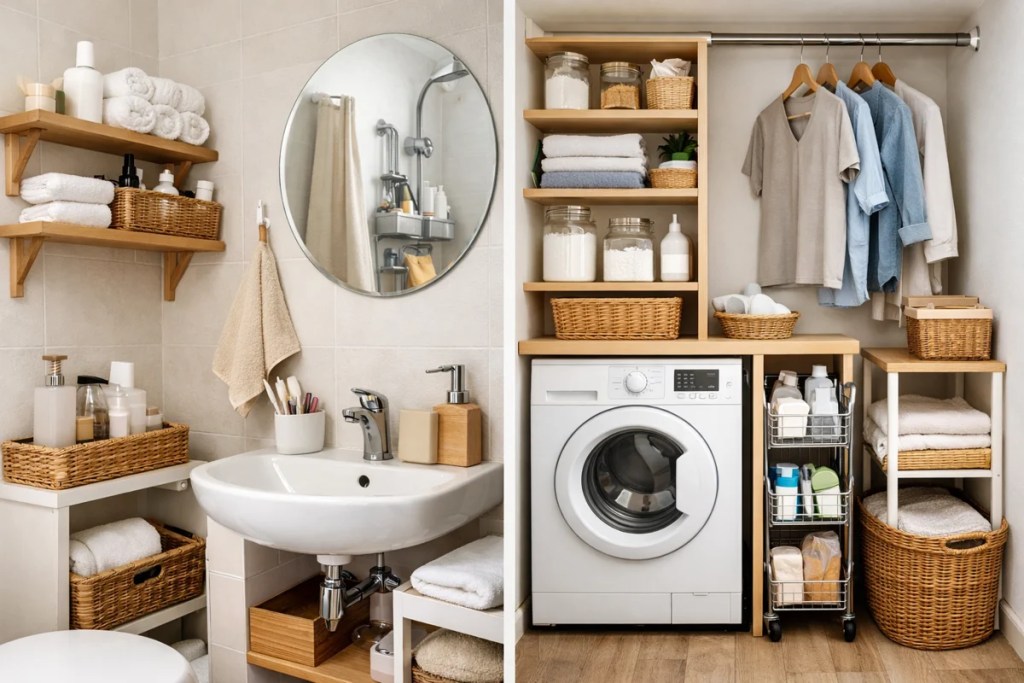
A small laundry room doesn’t feel frustrating because of its size—it feels frustrating because nothing seems to fit the way it should. When space is limited, even basic tasks like sorting clothes or reaching detergents can turn into a hassle.
Most people try to solve this by adding more storage, but that often makes things worse. The real problem isn’t the lack of space—it’s how that space is being used.
The good news is that you don’t need a full renovation or expensive solutions to fix it. With a few practical adjustments, you can turn even the smallest laundry area into a clean, functional, and easy-to-use space.
Start by Clearing the Area Completely
Before organizing anything, you need to reset the space.
Take everything out:
- Detergents
- Cleaning supplies
- Laundry tools
- Random stored items
Laundry areas often become storage zones for unrelated things. This step helps you separate what actually belongs there from what doesn’t.
Once everything is out, you can rebuild the space with intention instead of trying to fix a cluttered setup.
Keep Only What You Actually Use
This sounds obvious, but it’s often overlooked.
Look at what you really use on a weekly basis:
- One or two detergents
- Basic cleaning supplies
- Laundry basket
Everything else—backup products, rarely used items—can be stored somewhere else.
Keeping fewer items in the laundry area instantly makes it feel more open and manageable.
Use Vertical Space (But Keep It Light)
In tight spaces, vertical storage is essential.
You can use:
- Wall shelves
- Hooks
- Hanging storage
But don’t overload your walls.
Too many items stacked vertically can make the room feel cramped again. Keep it balanced—just enough to be functional, not overwhelming.
Create Simple Functional Zones
Even in a small laundry space, dividing areas helps a lot.
You can create basic zones like:
- Washing area
- Drying area
- Storage area
This doesn’t require labels or containers. It just means placing things where they make the most sense.
When everything has a clear purpose, the space becomes easier to use.
Keep the Machine Area Clear
The top of the washing machine often becomes a dumping surface.
Try to keep it as clear as possible.
Only keep essentials:
- Detergent
- One small basket or container
Everything else should be stored away.
A clean machine surface makes the whole space feel more organized.
Use Narrow Spaces That Usually Go Unnoticed
In small laundry rooms, there are often tiny gaps that seem useless at first glance—like the space between the washing machine and the wall, or a narrow corner next to a cabinet.
Instead of ignoring these areas, use them intentionally.
Even without buying anything new, you can:
- Slide in a slim basket for laundry items
- Store folded cloths or cleaning rags
- Keep frequently used items within reach
These small adjustments don’t look like much, but they add up quickly in tight spaces.
Simplify Your Laundry Routine (This Matters More Than You Think)
Sometimes the clutter isn’t just physical—it’s also in how the space is used.
If your laundry process involves too many steps, tools, or products, the area becomes harder to manage.
Try simplifying:
- Use fewer products
- Keep only what you need for regular use
- Avoid storing duplicates in the same place
A simpler routine means fewer items, and fewer items mean more space.
Use Baskets You Already Have
You don’t need special laundry organizers to create order.
Look around your home:
- Old baskets
- Boxes
- Storage bins
These can easily be repurposed for:
- Sorting clothes
- Holding cleaning supplies
- Keeping smaller items together
The key is not what you use—but how you use it.
Make Folding Easier, Not Perfect
A lot of people avoid folding clothes in small laundry spaces because it feels uncomfortable or cramped.
But folding doesn’t have to be perfect to be effective.
Even a simple, consistent folding style helps:
- Save space
- Keep things organized
- Reduce mess
If the space is too tight, you can move the folding step somewhere else—but keeping the system simple is what really matters.
Use the Back of Doors and Walls
Just like in bathrooms and closets, the back of doors is often wasted space.
You can use it for:
- Hanging clothes temporarily
- Storing lightweight items
- Keeping frequently used tools
Walls can also hold:
- Hooks
- Hanging items
- Small storage solutions
Even without installing anything new, just using existing hooks or spaces can make a difference.
Keep the Space Easy to Reset
The biggest mistake in small spaces is creating a system that’s hard to maintain.
Your laundry area should be:
- Quick to clean
- Easy to organize
- Simple to reset
If it takes too much effort, it won’t last.
A few small habits—like putting items back in place—are more important than any storage trick.
💬 My Personal Take (What Actually Worked for Me)
I used to think a small laundry space was just something you had to “deal with.” No matter how I arranged things, it always felt a bit cramped, a bit messy… like it was never fully under control.
At one point, I tried to fix it by adding more stuff—extra baskets, containers, even a small shelf. It looked better for a few days, but then everything slowly went back to the same situation. Just more structured clutter.
The turning point for me was realizing that I didn’t actually need more storage—I needed less in that space.
I started by removing everything that wasn’t part of my regular routine. Extra detergents, rarely used items, random things that somehow ended up there over time… once those were gone, the space immediately felt different.
Then I simplified how I used the area.
Instead of trying to organize everything perfectly, I just kept it practical:
- Daily items near the machine
- Everything else somewhere else
- No unnecessary steps
It’s not perfect now either. Some days things pile up, especially when laundry gets delayed. But the difference is that it’s easy to fix. A quick reset and it’s back to normal.
And honestly, that’s what matters most in a small space—it shouldn’t feel like work to keep it usable.
🧾 Conclusion
Organizing a small laundry room doesn’t require more space—it requires better use of the space you already have.
By keeping only essential items, using overlooked areas, and simplifying your routine, you can create a setup that feels more open and easier to manage.
You don’t need expensive solutions or complicated systems. In most cases, the simplest changes are the most effective.
Start small. Clear the space, adjust what you keep, and build a system that works for your daily routine. Over time, even a tight space can feel functional and comfortable.
❓ FAQ (SEO Featured Snippet Ready)
How do I organize a small laundry room without buying anything?
Start by removing unnecessary items, keeping only daily essentials, and using baskets or containers you already have to group items.
What is the best way to save space in a small laundry room?
Use vertical space, keep the machine area clear, and avoid storing items that aren’t part of your regular routine.
How can I keep my laundry space organized long-term?
Keep your system simple and do quick weekly resets. Avoid adding unnecessary items over time.
Should I store extra supplies in the laundry room?
It’s better to store backup supplies elsewhere to keep the main space uncluttered and easier to use.